As an Amazon Associate, we earn from qualifying purchases. Some links may be affiliate links at no extra cost to you. Although our opinions are based on curated research, we haven't used these products. Articles generated with AI.

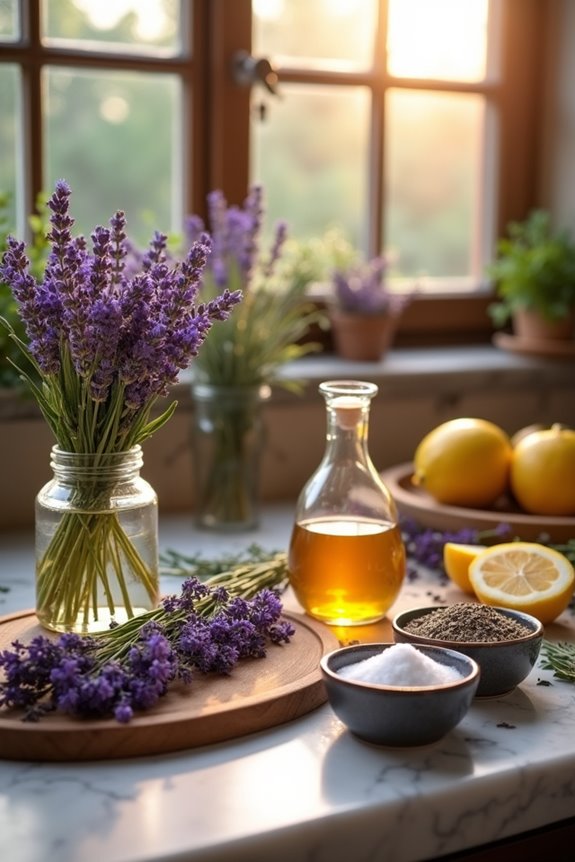
How To Use Lavender In Cooking?

To effectively use lavender in cooking, we prioritize *Lavandula angustifolia*, specifically varieties like ‘Munstead’ and ‘Royal Velvet,’ for their pleasant flavor profiles. Lavender beautifully complements Mediterranean herbs and pairs well with proteins like lamb, chicken, and pork. In sweet dishes, we can incorporate it into syrups or custards, while savory applications benefit from adding it to marinades or sauces. By balancing the infusion time, we guarantee the lavender enhances rather than overwhelms the dish, and further exploration reveals myriad culinary possibilities.
Key Takeaways
- Choose culinary-grade *Lavandula angustifolia* varieties like ‘Munstead’ for cooking, avoiding lavandin due to its bitterness.
- Pair lavender with Mediterranean herbs like rosemary and thyme, and use citrus to balance its floral intensity.
- Steep dried lavender in cream or milk for desserts, enhancing flavors in panna cotta or custards.
- Incorporate lavender into marinades, sauces, or roasted dishes to add a subtle floral note without overpowering other ingredients.
- Use lavender simple syrup for sweetening drinks or desserts, providing a floral twist to beverages and baked goods.
Selecting the Right Lavender for Cooking
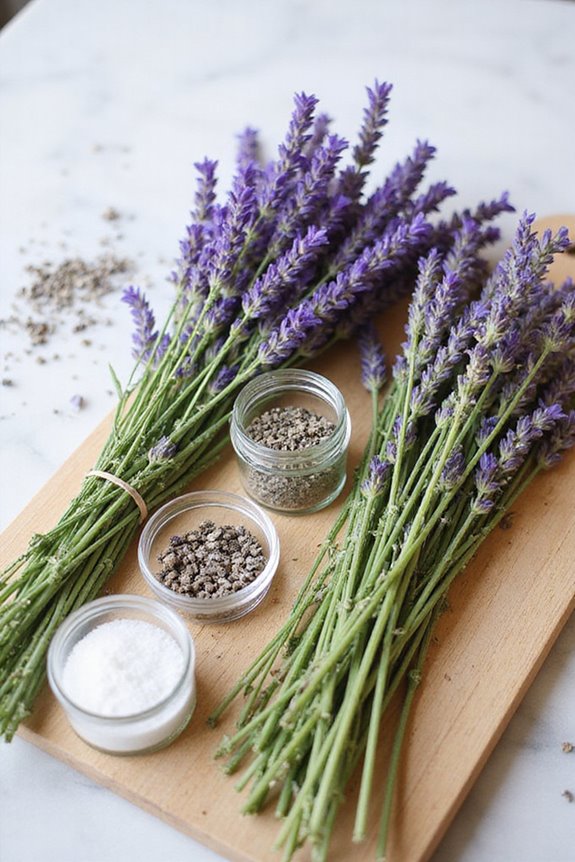
When selecting the right lavender for culinary applications, it is vital to prioritize varieties that enhance flavor without introducing bitterness, as many culinary experts recommend *Lavandula angustifolia* (commonly known as English lavender) due to its sweet and floral profile that complements a wide range of dishes. Notable culinary lavender varieties, such as ‘Munstead,’ ‘Melissa,’ and ‘Royal Velvet,’ offer distinct flavor nuances, each characterized by balanced sweetness and mild herbal undertones. It’s important to avoid lavandin (*Lavandula x intermedia*), which can impart a resinous bitterness. Consequently, sourcing distinctly labeled culinary-grade lavender guarantees our choice is free from harmful pesticide residues, thus preserving the intended aromatic and flavor qualities, which are paramount for enriching culinary creations and enhancing overall dining experiences.
Flavor Profiles and Complementary Ingredients
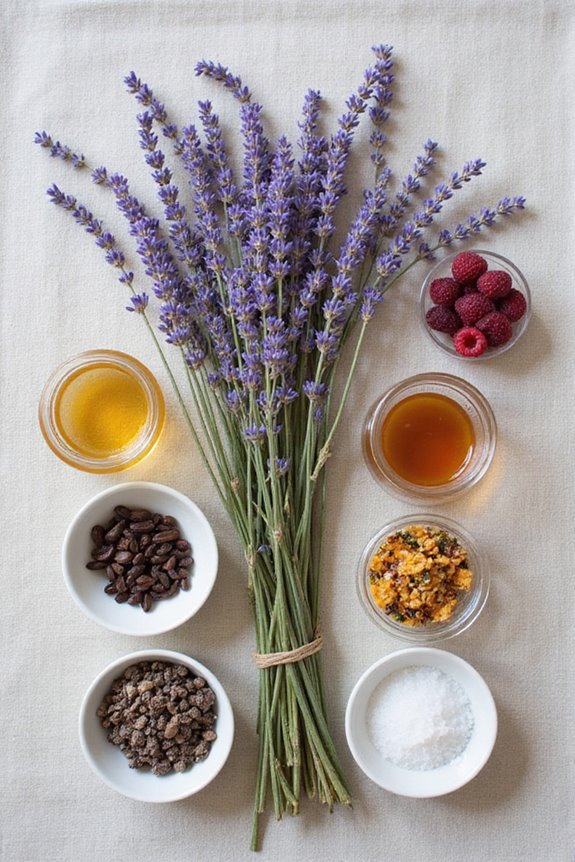
Though lavender is often categorized primarily for its fragrant attributes, its culinary applications reveal a multifaceted flavor profile that warrants careful consideration when incorporating it into dishes. Different lavender varieties contribute distinctive notes ranging from floral and minty to earthy and herbaceous, enhancing both sweet and savory culinary uses. In savory contexts, pairing lavender with Mediterranean herbs like rosemary, thyme, and oregano allows for a harmonious integration of flavors, while ingredients such as citrus, garlic, and black pepper can temper its intensity. Proteins like lamb, pork, and chicken highlight lavender’s robust character when marinated or seasoned strategically. Using dried lavender judiciously can mitigate any bitterness or soapy overtones, ensuring a balanced flavor experience across various dishes.
Incorporating Lavender Into Sweet Dishes
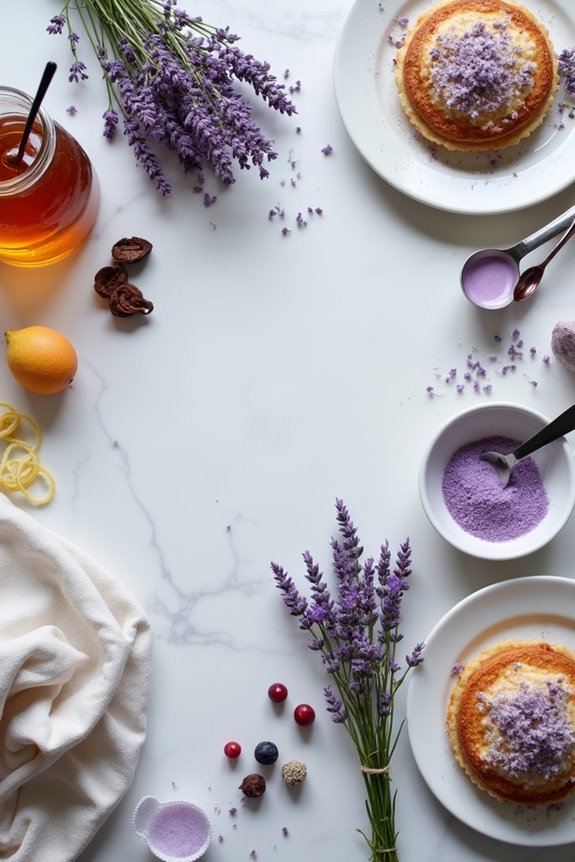
Incorporating lavender into sweet dishes can elevate the culinary experience, as its unique floral notes blend seamlessly with a variety of ingredients, enhancing both flavor and presentation. One exemplary approach is crafting lavender desserts, such as panna cotta, where dried lavender buds are steeped in warm cream for a smooth texture and delightful aroma. By utilizing gelatin, we achieve a delicate custard-like consistency, ensuring the floral infusion permeates the dish without overpowering it. Another effective method involves pairing lavender with berry flavors, particularly in blackberry lavender cakes, where lavender milk complements the fruit’s sweetness. Additionally, lightly applied lavender-flavored soaking syrups can enhance cakes, maintaining moisture while imparting subtle floral notes, resulting in sophisticated and balanced desserts.
Utilizing Lavender in Savory Dishes
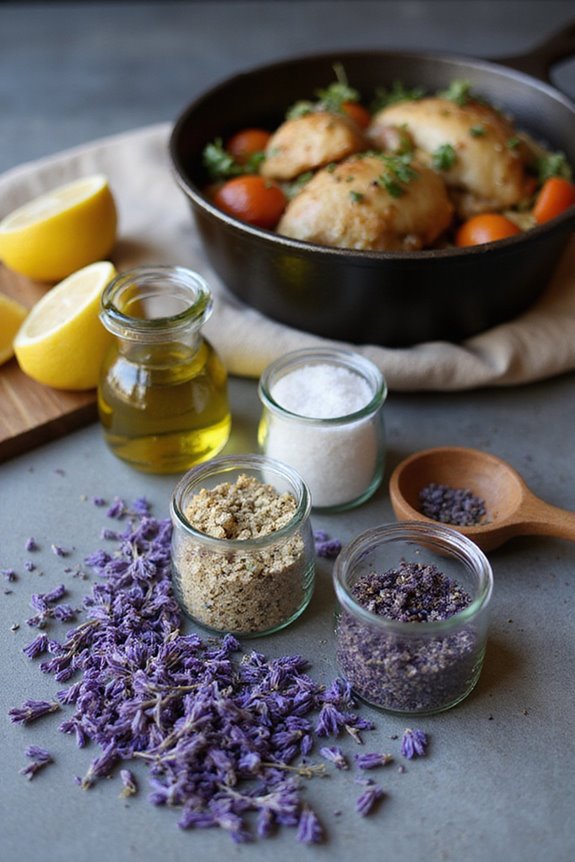
Utilizing lavender in savory dishes can deeply enhance our culinary repertoire, as this aromatic herb not only provides a nuanced flavor profile but also complements a diverse array of meats and vegetables. When executing culinary applications such as marinades or rubs, we find that lavender pairings with herbs like thyme and rosemary, alongside spices such as cumin, create a harmonious blend, particularly for marinades used with chicken and pork. In roasting scenarios, the herb’s subtle floral notes greatly elevate the dish, while its combination with ingredients like lemon or sumac guarantees a balanced palate. Similarly, lavender excels in enhancing sauces, soups, and salads; for instance, its incorporation into tomato soup adds remarkable complexity, exemplifying its versatility within savory cuisine.
Techniques for Cooking With Lavender
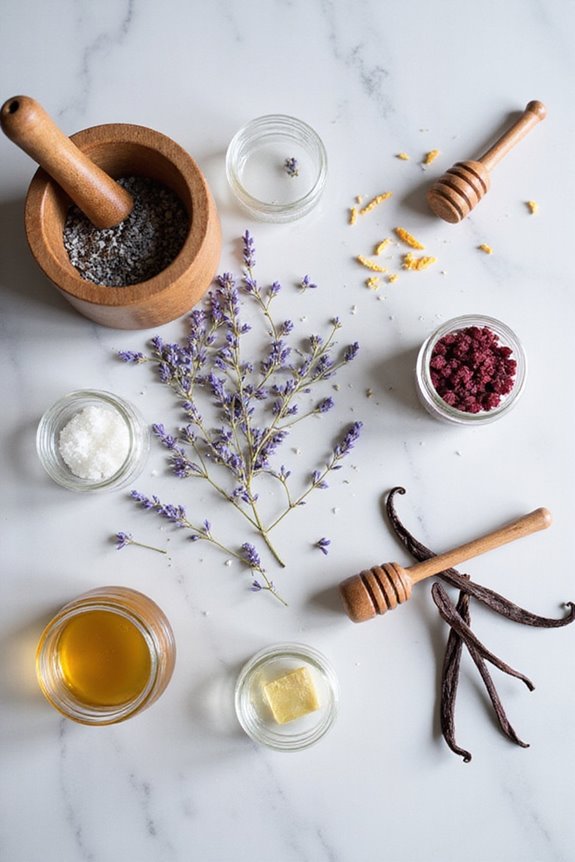
When exploring the diverse techniques for cooking with lavender, it is essential to contemplate multiple methods that amplify its aromatic presence while ensuring the flavor remains harmonious within various culinary applications. We can utilize lavender preservation methods, such as careful drying, to maintain its distinct aroma, while employing lavender seasoning tips to effectively integrate its flavor. Techniques like steeping dried buds in cream or creating lavender-infused butter enable us to extract essential oils, enhancing both sweet and savory dishes. Additionally, crafting lavender simple syrup allows us to sweeten beverages, imparting a floral undertone. By balancing the quantity of dried versus fresh lavender and monitoring infusion times, we can harmonize its floral character, ensuring it complements rather than overwhelms other ingredients in our creations.
Popular Lavender Recipes to Try
Exploring the domain of lavender-infused culinary creations reveals a plethora of exquisite recipes that harmoniously meld its floral essence with various flavors, particularly enhancing both sweet and savory dishes. For instance, our indulgent blackberry lavender cake features aromatic lavender milk and a delicate soaking syrup, yielding a perfectly balanced dessert. Additionally, we might consider crafting lavender ice cream, incorporating infused cream and honey, which provides a rich yet invigorating flavor experience. Alternatively, lavender cocktails serve as an elegant aperitif; infusing spirits with lavender simple syrup creates delightful beverages, like a lavender gin fizz. Finally, the lavender lemon bars exemplify how floral notes can elevate traditional desserts, offering a balanced sweet-tart profile expertly laced with lavender sugar, enhancing sophistication in our culinary repertoire.
Frequently Asked Questions
Can I Use Regular Lavender From My Garden for Cooking?
Absolutely, we can use garden varieties of lavender for cooking, but only if they’re culinary species. Notably, culinary lavender comprises around 20% of the total lavender varieties, bringing delightful flavors to our dishes when used properly.
How Do I Know if Lavender Is Edible?
To know if lavender’s edible, we should look for culinary lavender varieties like English lavender. Always purchase from reputable sources, ensuring it’s specifically labeled for cooking, avoiding any potentially harmful species or treated products.
Are There Any Health Benefits to Consuming Culinary Lavender?
Yes, there’re health benefits to consuming culinary lavender. Its calming properties can enhance mood, promote better sleep, and provide anti-inflammatory benefits. Incorporating lavender into our diet allows us to enjoy these unique culinary benefits.
What Is the Shelf Life of Dried Lavender?
Wondering how long our dried lavender lasts? Its shelf life typically spans 6 months to 3 years. For ideal freshness, let’s remember some essential storage tips to keep that delightful aroma intact!
Can Lavender Cause Allergic Reactions in Some People?
Yes, lavender can definitely cause allergic reactions in some people. Lavender allergies may lead to symptoms like skin irritation, respiratory issues, or gastrointestinal distress, so we should always be cautious and aware of individual sensitivities.